If they spot scaffold shade cloth during inspections, they should treat it like a prompt to ask better questions, request clearer documents, and time their due diligence to what’s actually happening on site.
Is scaffold shade cloth a warning sign when inspecting a property?
It can be, because scaffold shade cloth often means building works are underway, recently completed, or about to start. That matters because active works can affect access, noise, dust, parking, insurance, and even settlement timing.
In Sydney, Melbourne, Brisbane, Perth, and regional centres, scaffold shade cloth is commonly used for public safety and to control debris and dust. Buyers should assume there is a reason it was installed and ask what that reason is.
What does scaffold shade cloth usually mean on a residential building?
Most commonly, scaffold shade cloth is used during façade repairs, repainting, render replacement, roof works, remedial concrete repairs, balcony rectification, or window and cladding work. It can also appear during storm damage repairs after wind events and heavy rain.
For freestanding homes, it may indicate roof, gutter, or eave works. For apartments and townhouses, it often points to strata-funded maintenance or defect rectification that could involve levies, warranties, or ongoing disputes.
Could scaffold shade cloth hide issues a buyer should see in person?
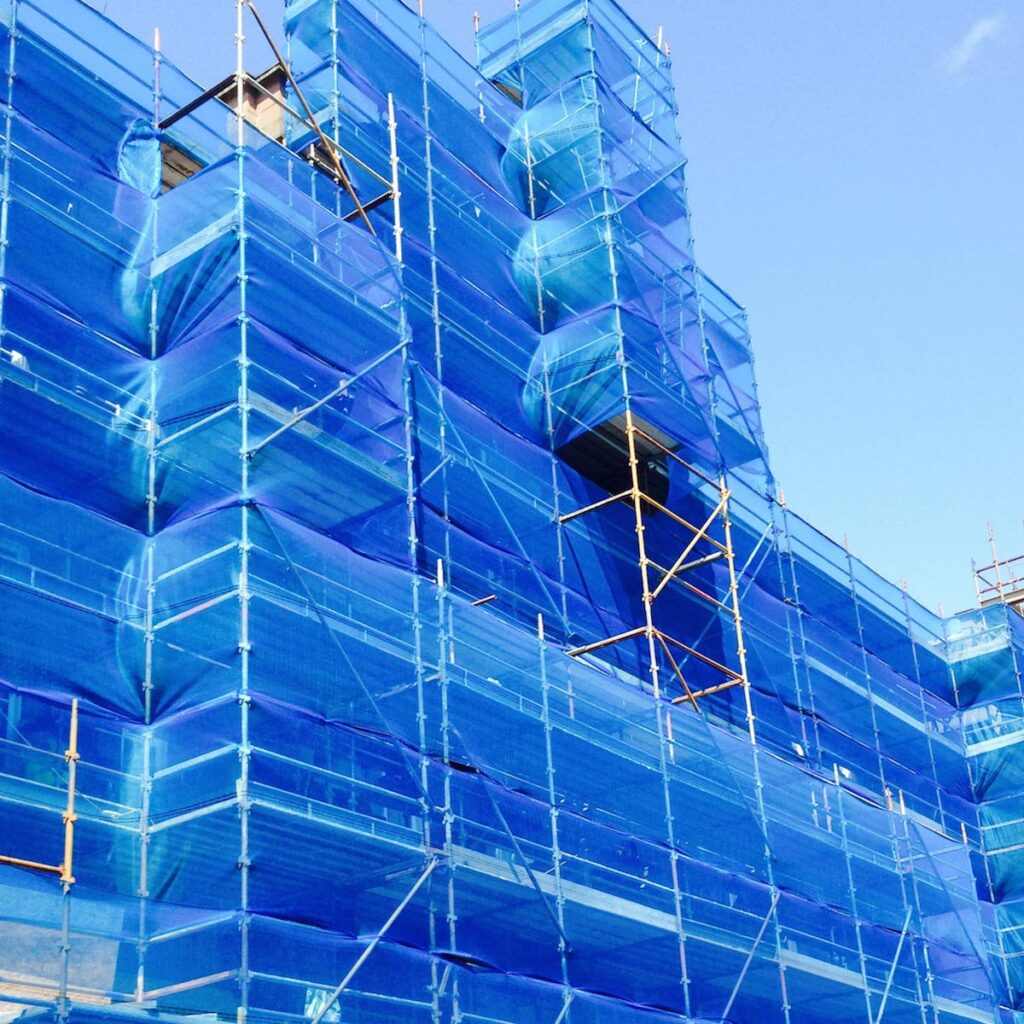
Yes, because scaffold shade cloth can limit visibility of cracks, spalling concrete, water staining, failed waterproofing, rusting balustrades, or uneven finishes. Even if the building report is solid, a blocked view means buyers might not see the true scope of works or the quality of the repair.
They should request recent photos of the affected elevations, details of what was repaired, and the contractor’s scope. If it is strata, they should also ask for any engineer reports and defect registers.
Who should buyers ask first when they see scaffold shade cloth?
They should start with the selling agent, then verify with the owner, strata manager, or body corporate records, depending on the property type. If scaffold shade cloth is present on an apartment building, the strata manager is often the fastest route to the facts.
Key documents to request include the works contract, scope of works, start and finish dates, warranties, and evidence of approvals. If a builder is on site, buyers can also ask for the site supervisor’s details and then confirm everything in writing.
Can scaffold shade cloth indicate upcoming costs like special levies or remedial work?
It can, particularly in strata schemes where major repairs are funded via capital works or special levies. scaffold shade cloth may be part of a long rectification program, not a one-off fix, and that can change the financial picture quickly.
They should check minutes from AGMs and committee meetings, the capital works plan, and levy history. If there is mention of concrete cancer, waterproofing failure, cladding replacement, or balcony remediation, they should assume the total cost could be significant and ask what has been paid versus what is still forecast.
Does scaffold shade cloth affect insurance, risk, or liability during the sale?
Sometimes, because scaffold shade cloth signals construction activity, and construction changes the risk profile of a site. For apartments, the strata policy usually remains in place, but buyers should still check whether there are exclusions, higher excesses, or claims history tied to the works.
For houses, buyers should ask whether the owner’s insurer has been notified of scaffolding and ongoing repairs. If the property is tenanted, they should also consider whether access restrictions could affect rental returns or tenancy agreements.
Could scaffold shade cloth impact access, parking, or day-to-day liveability?
Yes, especially in dense suburbs where footpaths, shared driveways, and street parking are already tight. scaffold shade cloth often comes with exclusion zones, temporary fencing, loading areas, and changed pedestrian routes.
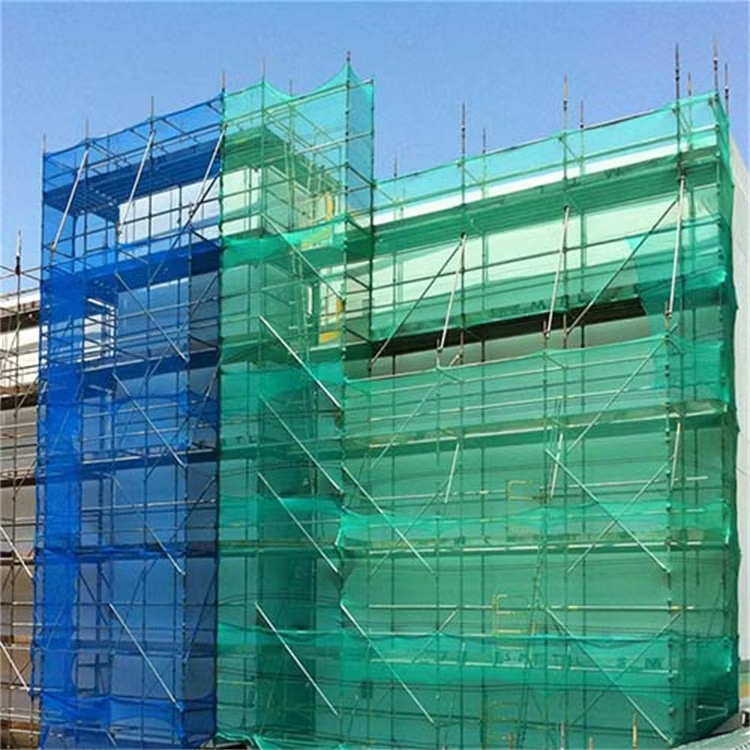
They should inspect at different times of day, not only during open homes. Using a Reo Bar Inspection Checklist can help buyers consider important access factors. In places like inner-city Sydney, Fitzroy, South Brisbane, or Fremantle, even a small access change can affect moving trucks, tradie access, visitor parking, and general amenity.
How should they check whether the scaffold shade cloth works are approved and compliant?
They should ask for evidence of approvals relevant to the works, including council permits where required, strata resolutions, and any engineering sign-off. scaffold shade cloth itself is not the approval, it is only a sign that something is being managed for safety or environmental control.
They can also check local council planning portals for active development applications, construction certificates, or notices. If the property is in a heritage overlay or a tightly controlled precinct, approvals and constraints can be more complex.
What due diligence questions should they ask when scaffold shade cloth is present?
They should ask direct questions and insist on direct answers, because scaffold shade cloth can be linked to anything from simple repainting to serious structural remediation. The goal is to understand scope, risk, timing, and cost.
They can use this checklist:
- What work is being done, and why now?
- Who is the contractor, and are they licensed and insured in Australia?
- What is the expected completion date, and what delays have occurred?
- What warranties apply, and who holds them after settlement?
- What access restrictions apply, and for how long?
- For strata: is there a special levy, loan, or forecast increase in levies?
- Are there disputes, defect claims, or tribunal matters connected to the works?
Can scaffold shade cloth affect valuation, settlement timing, or finance approval?
It can, because lenders and valuers may note active works, incomplete repairs, or limited access during inspection. scaffold shade cloth might prompt a valuer to request more information, especially if the façade condition cannot be properly assessed.
If buyers are on tight finance timelines, they should tell their broker early, share the context, and allow time for extra valuation questions. They should also check whether settlement could be delayed if access is restricted or works interfere with final inspections.
What should they do if scaffold shade cloth appears after they sign the contract?
They should act quickly and treat it as a change in circumstances that could affect their decision or price. If scaffold shade cloth appears between signing and settlement, they should request written confirmation of what changed, the updated timeline, and any impact on access or condition.
They can also ask their conveyancer or solicitor whether contract conditions cover new works, access limitations, or disclosure obligations. In strata purchases, an updated strata search can be worthwhile if new works begin suddenly.
How can buyers use scaffold shade cloth as a negotiation lever?
They can, but only if they can link scaffold shade cloth to a real cost, inconvenience, or risk that the seller cannot reasonably dismiss. That might mean upcoming levies, reduced amenity during the first months of ownership, or uncertainty about the final finish of repairs.
The strongest position comes from documents, not assumptions. If they can show written evidence of outstanding costs, delays, or incomplete works, they can negotiate price, adjust settlement timing, or request contract conditions that protect them.
When is scaffold shade cloth a positive sign rather than a red flag?
It can be positive if it indicates proactive maintenance that is properly approved, funded, and close to completion. scaffold shade cloth can mean the building is being looked after, especially when there is a clear scope, reputable contractor, and transparent paper trail.
Buyers should still confirm quality and warranties, but they can take comfort when the works reduce future maintenance risk. In many Australian markets, well-maintained strata buildings attract stronger long-term demand.
What is the simplest way to add scaffold shade cloth to a due-diligence routine?
They should treat scaffold shade cloth as a trigger for a short, repeatable process: identify the work, confirm approvals, confirm costs, confirm timing, and confirm warranties. That takes the emotion out of the decision and keeps the focus on risk.
If they do nothing else, they should document what they saw at inspection, request the scope in writing, and ensure their solicitor reviews any strata or repair material before cooling-off ends. This is exactly why scaffold shade cloth belongs on a serious due-diligence list.
<script type="application/ld+json">
{
  "@context": "https://schema.org",
  "@type": "BlogPosting",
  "mainEntityOfPage": {
    "@type": "WebPage",
    "@id": "https://dkkonstructioninc.com/buying-a-property-heres-why-scaffold-shade-cloth-belongs-on-your-due-diligence-list/"
  },
  "headline": "Buying a Property? Here's Why Scaffold Shade Cloth Belongs on Your Due-Diligence List",
  "image": [
    "https://dkkonstructioninc.com/wp-content/uploads/2026/07/SCAFF.jpg",
    "https://dkkonstructioninc.com/wp-content/uploads/2026/07/Scaffolding-Shade-Cloth-Safety-Debris-Netting.avif",
    "https://dkkonstructioninc.com/wp-content/uploads/2026/07/black-shade-cloth-800x800-1.webp"
  ],
  "author": {
    "@type": "",
    "name": "Jayden Bronner",
    "url": "https://dkkonstructioninc.com/author/admin/"
  },
  "publisher": {
    "@type": "Organization",
    "name": "DK Konstruction INC",
    "logo": {
      "@type": "ImageObject",
      "url": "https://dkkonstructioninc.com/wp-content/uploads/2024/09/cropped-ADC_City_contractors__14_-removebg-preview.png"
    }
  },
  "datePublished": ""
}
</script>